

Sponsored News: KIOTE/11 is a feature rich, IoT development platform for rapid prototyping
Melbourne, Florida, March 03, 2020 – Croxel announces the KIOTE/11, a low power, cellular IoT development platform containing all key elements for rapid prototyping of IoT products. While KIOTE/11 is feature rich to support a wide variety of applications, Croxel can customize KIOTE/11 to support unique demands. (more…)
March 3, 2020
Posted by: IoT global network

Today, increasing numbers of home appliances are controlled remotely. Thanks to the speedy growth of the Internet of Things, we can manage our speakers, thermostats, ovens, and even cars, from anywhere in the world. But sometimes, such networks lack security.
VPNs are effective tools that will safeguard any IoT system. Learn about the best solutions on Cooltechzone, which offers useful tips and tricks for ultimate protection. Implementation of a virtual private network allows companies to create a secure environment for the transfer of data between their data centers and the numerous devices.
How It Works
The tech infrastructure supporting the system is interconnected with IoT devices, which form a unified private network. The latter makes all communication between the two primary system elements secure. Today, when hacking is rampant and data leaks are making headlines, IoT security is not an issue to overlook.
Data traffic is encrypted and tunneled over the Internet, eventually reaching a server within the private network. This secure tunnel essentially extends the private network over a public one via a special link. VPN is what enhances public networks with private network connectivity.
Taking advantage of a reliable VPN, you will make all communications with the linked devices secure. For this purpose, you are provided with a special Access Server, which forms the basis of your private IOT network, now impenetrable to external attacks. Any attempts at eavesdropping on the transmitted data are successfully averted.
There’s More
And this is only one of the many benefits of VPN. These systems are indispensable for any company and individual today. Aside from IoT architecture providers, they protect their customers from data leaks and hacking. Shielding users from all kinds of malicious third-party interferences, VPNs make the world wide web a safe environment.
November 18, 2019
Posted by: IoT global network

WeKnow Media Ltd, the award organisers, are pleased to announce the winners of the 2019 IoT Global Awards.
With 11 categories encompassing every sector touched by the Internet of Things (IoT) and judged by a specially assembled panel of independent experts, the IoT Global Awards now in its second year, has attracted more than 150 entries from enterprises and innovators across the globe. (more…)
October 11, 2019
Posted by: IoT global network

WeKnow Media Ltd, the award organisers, are pleased to announce the shortlisted nominees of the 2019 IoT Global Awards!
“This is only the second year of the IoT Global Awards and it is inspiring to see so many new and exciting Internet of Things innovations already in action,” says Jeremy Cowan, Editorial Director of IoT Global Network, the headline sponsor behind the 2019 IoT Global Awards.
“We have been truly impressed by the hard work and ingenuity that has gone into the IoT solutions and applications submitted to us by organisations worldwide. The shortlisted entries met our strict selection criteria and will now be assessed by an Unrivalled panel of independent Experts”
The shortlisted nominees are:
IoT PRODUCT / SERVICE OF THE YEAR
Automotive, transport & travel
| Company | Product/service |
| A1 Digital | Freight trains become “smart” |
| MARLABS INC | IoT Connected Solution – Connected Airline/Cruise Catering – Smart Trolleys & Kitchens & Connected Life Sciences IoT Platform & Ecosystem |
| Telstra | Telstra Track and Monitor – Turning data into decisions and cost savings |
| Cando Rail Services | Quasar: Rail Optimization Platform |
| Eurotech | Hyper-convergence at the Edge |
| TRANSATEL | Transatel’s solution for the Connected Car |
| TRANSATEL | Transatel’s connectivity solution for Airbus – Skywise |
| SmartAxiom,Inc | Managing and Securing the Internet-of-Things with Edge Blockchain Technology |
| Inseego | Ctrack by Inseego |
| ERM Advanced Telematics | IoTLink Technology |
| SWIM.AI | SWIM.AI and Dubai RTA Smart Driver System |
| Controlant | Controlant – Real-time, digitalized visibility for the end-to-end global supply chain |
Big data, cloud & analytics
| Company | Product/service |
| Everynet | Neutral-host networks for low cost IoT |
| SWIM.AI | SWIM.AI and Dubai RTA Smart Driver System |
| Apstra | Apstra AOS 3.1 |
| Eseye Ltd | Eseye AnyNet Secure for AWS |
| Guavus (a Thales company) | Guavus Reflex – Smart Industry & IoT solution |
| Shields Energy | CODA by Shields Energy – IoT and Big Data solutions for industrial and commercial buildings. |
| Nexo | The Nexo Solution |
| BitBox USA, LLC | Operational Intelligence Meets Distributed Facilities |
| DevicePilot | The analytics, visualization, and automation tool for IoT |
| McObject | McObject’s eXtremeDB database management system |
| ASUS | ASUS Intelligent Edge Computer PE200U |
| meShare Inc. | meShare IoT Platform |
Connected consumer & smart home
| Company | Product/service |
| King Abdulaziz University | Energy-Efficient IoT Home Monitoring and Automation System (EE-HMA) |
| Abode | abode iota |
| Ezlo Innovation | Ezlo Atom |
| ZOME Energy Networks, Inc. | ZOMEKIT for Multi-family Housing |
| Thales | Gemalto Instant Connect – Bringing effortless initial mobile connectivity to consumer & M2M eSIM-ready devices |
| Control4 | Control4 Smart Home OS 3 |
| ON Semiconductor | RSL10 Solar Cell Multi-Sensor platform |
| Hero Labs | Solving real-life problems with truly smart water technology |
| McAfee | McAfee Secure Home Platform |
| Amazon Web Services | AWS IoT for the Connected Home |
| meShare Inc. | meShare 1080p Indoor Camera |
| WattTime | WattTime’s AER Software Gives IoT Users Option to Choose Clean Energy |
Connected health or wearable tech
| Company | Product/service |
| Essence | Essence Radar Fall Detector, an Intelligent multi-sensor fall solution – A new dimension in fall detection |
| MARLABS INC | IoT Connected Solution – Connected Airline/Cruise Catering – Smart Trolleys & Kitchens & Connected Life Sciences IoT Platform & Ecosystem |
| Ericsson | Brighter: Data-driven solutions for smarter treatment of chronic conditions. |
| Telecom26 | SIMplicity: providing coverage for remote diagnostic tools for malaria, Ebola and more, securely and via dedicated, optimised connections. |
| Thales | Gemalto Instant Connect – Bringing effortless initial mobile connectivity to consumer & M2M eSIM-ready devices |
| Procter & Gamble | Oral-B Connect: Enabling better oral health care habits through interactive, personalized and user friendly services |
| Airthinx | See the Air you Breathe |
| Guys and st Thomas’ NHS Trust | CogStack – data or info search facility for NHS Trusts |
| McObject | McObject’s eXtremeDB database management system |
Industry & construction
| Company | Product/service |
| Carnell Support Services Ltd | Recognising excellence in IoT innovation |
| BehrTech | MYTHINGS Wireless Connectivity Platform |
| TRANSATEL | Construction 4.0: Transatel connects lifting equipment for AMCS technologies’ zoning and anti-collision products |
| Telstra | Telstra Track and Monitor – Turning data into decisions and cost savings |
| Terex Corporation | OMNI by Terex Improves Jobsite Connectivity, Safety and Efficiency |
| Thales | Gemalto Instant Connect – Bringing effortless initial mobile connectivity to consumer & M2M eSIM-ready devices |
| Liquid Telecom | Improving Fishing Yields in Kenya |
| Innovaxxion | Innovaxxion |
| Eurotech | Hyper-convergence at the Edge |
| Saudi Aramco | Auto Well Space Out System |
| Adesto Technologies | SmartServer IoT: An Industrial Edge Server to Accelerate Industry 4.0 |
| Ericsson | Grundfos – The full range supplier of pumps and pump solutions |
| ERM Advanced Telematics | IoTLink Technology |
Research & development or new launch
| Company | Product/service |
| iBASIS | Catapulting Unified IoT Connectivity | iBASIS Global Access for ThingsTM for IoT Product/Service of the Year |
| Altice Labs | IoT Smart Probe – Handheld QoS Meter |
| Telstra | Telstra Track and Monitor – Turning data into decisions and cost savings |
| Thales | Gemalto Instant Connect – Bringing effortless initial mobile connectivity to consumer & M2M eSIM-ready devices |
| Liquid Telecom | Improving Fishing Yields in Kenya |
| Procter & Gamble | Oral-B Connect: Enabling better oral health care habits through interactive, personalized and user friendly services |
| Saudi Aramco | Auto Well Space Out System |
| EBI | Pioneering IoT Marketing with DDM, the World\’s First Wireless Digital Direct Mail |
| Enlighted | Enlighted One |
| 1oT | World’s first full end-to-end eSIM solution |
| Telit | Telit OneEdge |
| PenguinIN | PenguinIN – Managed Indoor Positioning and Navigation |
Retail, marketing & hospitality
| Company | Product/service |
| Eseye Ltd | Eseye AnyNet Secure & Active Management Solution (Costa Express) |
| Shields Energy | CODA by Shields Energy – IoT and Big Data solutions for industrial and commercial buildings. |
| Nexo | The Nexo Solution |
| EBI | Pioneering IoT Marketing with DDM, the World’s First Wireless Digital Direct Mail |
| Hark | Revolutionising Retail – The Power of Real-time Energy Visibility |
| PenguinIN | PenguinIN – Managed Indoor Positioning and Navigation |
Securing IoT
| Company | Product/service |
| Attivo Networks | ThreatDefend Detection Platform for Securing IoT |
| Armis | Keeping All IoT Above the Radar |
| Verimatrix | Verimatrix Brings Effortless Application Security to the Masses, Launches New ProtectMyApp Service for Developers |
| Cybeats Technologies Inc. | Cybeats: Eliminating IoT device threats from the inside out. |
| Sectigo | IoT Platform of the Year |
| DigiCert | Scalable PKI Solutions for Identity and Encryption |
| NanoLock Security | NanoLock Security: Preventing Smart City Hacks |
| Cynerio | Securing the M in IoMT |
| SmartAxiom,Inc | Managing and Securing the Internet-of-Things with Edge Blockchain Technology |
| Aeris | Aeris ConnectionLock – Securing the next-generation of IoT |
| Amazon Web Services | Securing IoT Applications with AWS IoT |
| NXM Labs Inc. | NXM Autonomous Security Platform |
Smart cities, government & utilities
| Company | Product/service |
| Cleverciti Systems | Cleverciti Systems: Saving the environment one parking lot at a time |
| Itron | Smart street lighting – the catalyst for a smart city network |
| Synchronoss | The Synchronoss Smart Buildings Platform |
| Grid Smarter Cities | Kerb – Intelligent Kerbside Management |
| TRANSATEL | Transatel and Ledger partnership on blockchain solutions for “Green Energy” certification |
| Trinity Mobility | IoT and AI based Smart City Digital Platform- trinityICCC |
| Mobilisis d.o.o. | IoT NBPS Smart Parking Sensor and Platform |
| Ericsson | Grundfos – The full range supplier of pumps and pump solutions |
| Eseye Ltd | Eseye AnyNet Secure (Mayflower Smart Control) |
| Liquid Telecom | Reducing Air Pollution in Africa |
| Hark | Revolutionising Retail – The Power of Real-time Energy Visibility |
| Frigbot | Frigbot – Powering the Internet of Fridges |
IoT BUSINESS EXCELLENCE
CxO of the year
| Sprint | Ivo Rook, Senior Vice President of Internet of Things (IoT) |
| iBASIS | Ajay Joseph, CTO of the Year for First Time Seamless Global IoT Connectivity |
| Schneider Electric | CxO of the Year Award: Kevin Brown, Schneider Electric |
Start up, business development or ecosystem of the year
| Sprint | Sprint Curiosity IoT |
| Everynet | Neutral-host networks for low cost IoT |
| iBASIS | iBASIS Global Access for ThingsTM Ecosystem of the Year for the Only Unified Platform Supporting Connectivity for Operators, Device Manufacturers, and Enterprises Worldwide |
| Senet | Senet Low Power Wide Area Virtual Network (LVNTM) |
| Innovaxxion | Innovaxxion |
| Airthinx | See the Air you Breathe |
| MDS Global | Sharing the IoT Revenue |
| Frigbot | Frigbot – Powering the Internet of Fridges |
| 1oT | World\’s first full end-to-end eSIM solution |
| MAVOCO AG | MAVOCO – CMP software for the entire IoT world and beyond! |
| BearingPoint//Beyond | The Digital Business Marketplace |
| Tata Communications Limited | Tata Communications MOVETM |
The winners will be announced on October 11th by leading IoT media brands; IoT Now, IoT Global Network, VanillaPlus, IoT Now Transport, IoT Events Hub and IoT White Book. Our proud media partners, Geo Connexion, iSCOOP and IoT For All, will also share the announcement via their own media portals and social networks.
A huge ‘Thank You’ to all those who entered their IoT products, services and talent in the awards and many congratulations to all the shortlisted nominees.
For any further information on the IoT Global Awards, go to www.iotglobalawards.com
 |
 |
 |
 |
September 25, 2019
Posted by: IoT global network

Event date: February 19 – February 21, 2020
Pragati Maidan, New Delhi, India
August 5, 2019
Posted by: IoT global network

Innovative start-up futurioX of Bolzano, founded by systems srl in autumn of 2016, that creates specialised solutions for the “Internet of Things.” (more…)
March 13, 2019
Posted by: Avadhoot Patil

Zest4 have been awarded Best IoT/M2M Provider 2018 at the Comms Business Awards, held on Thursday 21st June 2018.
Criteria judged included; company growth, product innovation, market disruption and stand-out solutions. Zest4 also evidenced a solution sold through a Channel Partner, showing just how beneficial using Zest4 can be to deliver commercial successes for your business.
Zest4 have made significant investments in recent years, highlighting our commitment to new services that will help our partners earn more revenue and differentiate themselves. Recently Zest4 invested in becoming an IoT MVNO designed and dedicated for the channel. Zest4 is totally committed to their channel partners, creating tailored on-boarding and training plans for each partner, ensuring that they make, what can be a very complicated, journey as easy as possible. Flexible commercial terms, trial solutions, and one bill for all Zest4 services are just part of what they offer, alongside our experience and expertise.
Get in touch if you’d like to learn more about how Zest4 can help with your IoT/M2M solutions. Click here
January 16, 2019
Posted by: IoT global network

Zest4 have confirmed their dedication to M2M & IoT solutions by licensing the Emport IoT platform from Arkessa, a leading M2M/IoT connectivity service provider. This association gives Zest4 the ability to deliver IoT MVNO services solutions alongside new communications technology, to maximise the IoT revenue opportunities not only in the UC channel, but to existing IoT suppliers and IoT solutions developers across all verticals.
Zest4 have acquired this capability to ensure their partners can access multiple networks, both in the UK and globally. Enabled by Arkessa’s Emport platform, partners have ultimate control under one management billing platform to manage their entire estate of SIMS irrespective of mobile network operator. Not only this, but they will be able to; track SIM usage individually, by sub estates, or in entirety; monitor data alerts, caps and SIM data allowance usage; produce data usage reports with ease and organise their estates through tags and categories of their choice.
The deal means Zest4 can offer an IoT tariff for any opportunity that a partner uncovers – with their usual competitive pricing and commercial flexibility.
Anton le Saux, Zest4’s Head of IoT said “Arkessa’s Emport is a proven Enterprise MVNO platform which we can now leverage, customise and target at UC channel businesses, verifying our position as a leading provider of IoT.”
Philip McDermott, Arkessa’s COO said “Arkessa is delighted to enable Zest4 with our Emport IoT platform, with such a strong track record of working with strategic partners to deliver UC solutions which are easy to understand and include high quality equipment, competitive prices and proactive support, it is a great fit. The Arkessa Platform-as-a-Service solution gives Zest4 the freedom to pursue their channel-focussed approach to IoT.”
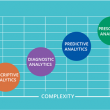
IoT analytics can be divided into two broad categories: device data analytics and network analytics. A further division can be made into descriptive, diagnostic, predictive and prescriptive analytics. These are generic terms that predate IoT, but they are just as relevant today. The early analysis of enterprise data, e.g. data generated by mainstream systems like CRM and ERP, was and still is done with a Business Intelligence platform. (more…)
December 7, 2018
Posted by: IoT global network

Event date: January 29 – February 1, 2019
Lauderdale, Florida, USA
November 15, 2018
Posted by: IoT global network