



Search Results

Search results for: data analysis

Podcast: Edge starts to play central role in enterprise 5G

So much to cover in 30 minutes: We’re at the beginning of the centralised role that MEC is going to play in enterprise 5G, as Dheeraj Remella, CPO of VoltDB tells Tech Trends Pod. He deftly handles the loaded question of where to bring edge intelligence. And we’re at another watershed, says analyst, Jim Morrish of Transforma Insights; 2020 is a TIPping point in the drive to OpenRAN. Open architecture is in use at Vodafone, Telefonica, Etisalat, and Japan’s Rakuten, to name just a few telcos. Oh, and it works! And before we share what made us laugh, hear how virtual reality training in the enterprise is faster and cheaper than old school methods as you learn 3 steps to improve your business training.  (more…)

Read more

October 19, 2020

Posted by: IoT global network

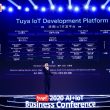
AI plus IoT picture of a conference stage

The time to go all in for AIoT is now, say experts at Tuya Smart’s Conference

(IoTNewsNet.com – Sponsored News) The logistics industry has long been a cornerstone of human progress but ironically has been one that is highly resistant to technological innovation and implementation. Change is often slow and expensive. In the time of a global pandemic crisis, it is natural for businesses to clam up and be afraid of change.

At the recent AI+IoT Business Conference co-hosted by Tuya Smart, a leading IoT global platform together with Asia Pacific Intelligent Business Alliance (AIBA), many of the industry leaders from Google, Lenovo, Gree, TCL, Zigbee Alliance and more shared their thoughts for the AIoT implementation outlook in various industries. Here are some takeaways that will impact the global supply chain in the near future.

AI, IoT and cloud connectivity are the main technologies that will push the logistics industry forward

Digital transformation is progressively turning into smart automation, while the increasingly growing digital ecosystem of enterprises and factories is turning into a more tightly connected and organic structure. The very notion of automation is being challenged and it will resemble more like a web of interconnected devices compared to the traditional ‘chain’ model.

However, COVID-19 has forced many companies to take a second and closer look at their technological capabilities, and the logistics industry is particularly at risk. During one of the global roundtables hosted by Jeff Immelt, former CEO and Chairman of GE, Venture Partner of NEA, now Tuya’s US Chairman, he commented after the talk with executives from Lenovo, Havells, Merkury, and Status, that AIoT “is really a pervasive theme. I think the good news for smart homes is everybody is sitting at home and finally they figure out how all these devices work. Basically now, more consumers are aware of the technologies. One truth is that the world is going to change; there is challenges; but the other truth is that there is going to be big opportunities.”

IoT and AI are two independent technologies that have a significant impact on logistics and the global supply chain. While IoT is the digital nervous system, AI becomes the brain that makes decisions which control the overall system. Logistics is less about moving objects but rather a network that delivers intelligent and connected systems that are capable of connecting consumers with retailers and suppliers.

The time to invest in AloT is now as logistics companies are increasingly employing edge computing technology in their warehouses and vehicles. Consumers are also buying WiFi-enabled household goods like fridges and TVs, and as the web grows, there are two distinct benefits that supply chain companies globally can enjoy from this innovation.

Intel recently did a survey noted that business intelligence (33%), near-real-time monitoring and visibility (31%), and condition-based monitoring (30%) topped the list of analysis techniques used with IoT projects.

These techniques have direct benefits to the logistics and supply chain industry. Companies that have developed AIoT capabilities report stronger results across critical organisational goals including the ability to speed up operations, introduce new digital services, improve employee productivity and decrease costs. For example, companies using IoT data to speed up operations without AI saw a 32% increase; companies adding AI to the mix saw speeds improve by 53%.

Now platforms choses company like Tuya who provides platform for business to develop their services scopes with various SaaS services, from commercial lighting, to hotel, apartment, healthcare system, etc. with such service dashboard, more business have access to their user data, and logistics status from all kinds, so as to better improve their understanding of the market and in the vertical.

Benefits of AIoT for logistics companies

The first is data collection and connectivity. As more devices are linked together providing a seamless experience to the user, companies can use the data collected legally to better understand and enhance the movement of goods. At the event, Tuya’s President and Co-Founder Leo Chen introduced the Tuya Cloud Manufacturing system, which is based on PMS production system of factories. This system is developed for factories to manage production tasks and check production status remotely, which effectively reduces the number of production abnormalities by 55% as well as shortens the delivery time by 32%.

The second benefit is the IoT perspective where latency is a major consideration; what happens when something happens that requires an instant response? If you’re sending that enquiry back to the cloud to be processed and then need to send a response back, that probably isn’t going to be fast enough.

Over the last 20 years, technology has disrupted everything from print and film, to music. Some have handled disruption well, others have gone under, and the logistics industry cannot afford to be stubborn and persist with the same ideas it’s been peddling for the last 30 years for the next 30. AIoT is mature enough and has seen many successful use cases, from Amazon in the US to Tokopedia online marketplace in south-eastern Asia. AloT offers the opportunity to underlay smart cities and smart transport networks with the same network architecture – the level of interoperability that could provide can only be a good thing.


Read more

June 17, 2020

Posted by: IoT global network

Croxel announces KIOTE/11 for rapid IoT product development

Sponsored News: KIOTE/11 is a feature rich, IoT development platform for rapid prototyping

Melbourne, Florida, March 03, 2020 – Croxel announces the KIOTE/11, a low power, cellular IoT development platform containing all key elements for rapid prototyping of IoT products.  While KIOTE/11 is feature rich to support a wide variety of applications, Croxel can customize KIOTE/11 to support unique demands. (more…)

Read more

March 3, 2020

Posted by: IoT global network

How to get the most from the independent IoT platform finder – IoT Pilot webinar on-demand

If you missed the webinar don’t worry!
Catch up with our highlights below and register here to stream the live recording.

Participants: IoT Now, IoT M2M Council, ARM, Beecham Research

Highlights
The Webinar started with two on-line polls of the areas of interest and the challenges of the participants. The first was the role of IoT in the organisation: user, OEM, application developer, solutions vendor, or systems integrator / consultant. About 50% were solution vendors and 50% users of various types, including consultants. This is more or less as expected. The second was the challenges: government regulation; internal conflicts, difficult to establish the right businesses model; lack of funding / skills; interoperability and standards. The business model was seen as the primary challenge, with interoperability also a significant challenge.

The on-line polls were followed by an introduction to IoT platforms and their use in the marketplace. Topics covered included the four key components: the application development layer plus the data, device and connectivity management layers, which are becoming increasingly complex. This was followed by an architectural view of the platform, i.e. the four main components, plus three additional categories – consumer centric, vertical-centric, such as Smart City platforms, and developer centric, plus end-to-end security which affects all categories.

This was followed by a graph showing the accelerating growth in the number of platforms in recent years. It is not slowing down: over 400 in 2016; 450 in 2017; over 500 right now and counting. Consolidation is taking place, but not a lot. Big companies are acquiring smaller companies in order to add more functionality. The wide choice will continue for the foreseeable future, hence the need for a way of helping users match their IoT requirements with the relevant platform or platforms.

That is something Beecham Research and IoT Global Network have been working on and now there is an online platform-matching tool known as IoT Pilot. It is free for adopters and has been designed to help enterprises evaluate and navigate the IoT platform landscape. This tool is not intended to generate a final selection; the aim is to provide an objective short list of candidate platforms.

Usage of the tool starts by entering responses to key questions. IoT Pilot employs the resulting search data to match the user‘s needs with a database of IoT platforms and create a short list that is available online straightaway. The same data is also summarised and analysed by Beecham Research to highlight emerging trends in the market place as well as key user requirements and concerns.

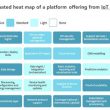
The short list identifies the name of the platform and the vendor, the category, plus a “heat map” of the platform’s strengths and weaknesses. Heat maps are a visual representation of capability of the various components of the platform: they are the results of analysis conducted by Beecham Research. In addition, there is a button on some of the individual platform pages that users can employ to auto-generate an email containing their selection criteria, to start a discussion with selected vendors.

Once users have a short list of platforms to look at – what next? Ideally they will want to approach some vendors with a list of questions to answer, so they can make a final selection and move towards implementing their chosen IoT solution. This is where work on an IoT software RFP, fronted by the IMC and on which Beecham Research also worked, comes into focus. A template RFP covering IoT platforms was created from this work that includes nearly 100 questions to ask platform vendors in order to learn more about their capabilities. This RFP template is available from the IMC (www.iotm2mcouncil.org).

Read more

October 19, 2018

Posted by: IoT global network

The IoT Platform market is ultra-competitive and, until recently, hard to navigate

While you can do IoT without an IoT platform, it certainly aids getting an IoT solution up and running quickly and probably at lower cost than alternative approaches. Middleware is needed to enable communications between the OT (operation technology) domain where data is generated and the business IT (information technology) domain where it is used. That’s the baseline function of an IoT platform. Middleware is also employed to facilitate secure monitoring, control and analysis of device and sensor behaviour in the field. IoT platforms are therefore a key enabling product. Their functionality largely determines the performance and efficiency of IoT solutions.

Given the prognosis for the growth of IoT it is hardly surprising that a plethora of platform vendors have thrown their hat into the arena. Depending on what the term ‘IoT platform’ covers, right now there are upwards of 500 in the market in all shapes and sizes. That means the market is ultra-competitive and it is also confusing because vendors make similar, often overhyped claims for their product. In addition, it is hard to make apples versus apples comparisons since the platforms often address different requirements. A solution that employs over a hundred thousand devices will need a platform that is communications centric. One that requires integration with existing enterprise systems required will require a robust device management capability.

Those are two of five major categories that Beecham Research employs. In addition to device management and connectivity they include security, application development and data management/analytics as well as vertical market-specific platforms, such as Smart City oriented and developer-oriented. Vendors will typically focus on their area of expertise, but platform strengths have to align with solution needs: it’s a make or break issue. Therefore the requisite solution may involve a combination of different platforms covering different layers in the overall IoT stack.

Replacing confusion with clarity
Evaluating the performance of 500 platforms is clearly a difficult, time-consuming process and it becomes an even more significant issue when two or more platforms are required. Users may elect to “play safe” and go with one of the heavy hitters. However – which one? This can also result in a platform that is expensive, over-engineered and not optimised for the particular solution requirement.

Beecham Research recognised the emergence of this issue and created a comprehensive database on the various platforms as well as a matching tool known as IoT Pilot. Users enter their baseline requirements and IoT Pilot is then employed to navigate the database and give the user a list of vendors whose products match the performance criteria.

Performance parameters are analysed and presented in a structured way for all products, which facilitates comparisons. In addition, there is background information on the relevant vendors, bullet points on the key strengths and categories, together with a “heat map”. This is a 5 x 5 matrix (example above) comprising performance indicators mapped against generic platform functionality. These maps allow users to see a platform’s functionality and performance parameters and thereby obtain a holistic, memorable impression.

In a nutshell, the service replaces multiple product confusion with insightful clarity.

Read more

Posted by: IoT global network

IoT Pilot webinar: How to get the most from the independent IoT platform finder

If you’re in the process of adopting Internet of Things (IoT) applications, you’ll know how vital it is to choose the right platform. Finding the right one to meet your business needs sounds like finding a needle in a haystack, we understand that. There are platforms for Connectivity, for Device Management, Application Enablement and Data Management. To complicate matters the number of platforms on the market is growing every month, with more than 400 platforms now on offer. (more…)

Read more

August 30, 2018

Posted by: IoT global network

Ursalink UR7X Series Industrial Wireless Router Is Certified by Microsoft Azure

XIAMEN, CHINA, November 30, 2017 – Ursalink (www.ursalink.com), a customer-centric hardware manufacturer that serves easily remote access connectivity and management for IoT/M2M communications, is proud to announce that it has met all the Microsoft Azure certification requirements and got certified for UR71UR72and UR75 industrial wireless router.

The versatile UR71UR72 and UR75, featuring Gigabit Ethernet, failover, Python SDK, firewall, VPN and more, is poised to satisfy customers with its top-notch performance that offers swift, stable and secure M2M communications.

Integrated with Microsoft Azure, the certified UR71UR72 and UR75 industrial wireless router favors the ability to transmit remote field data from sensors, PLC and beyond to the Azure IoT Cloud in near-real time and empowers customers to perform further analysis, turn insights into action and take measures accordingly prior to any malfunction or permanent damage may occur.

As an intelligent IoT-based strategy, the convergence of the UR7X Series and the Azure IoT Cloud comes with exciting promises that drive custom-tailored IoT solution, operation efficiency enhancement and downtime expenses reduction.

The UR7X Series is now listed on Azure IoT Device Catalog:

UR71https://catalog.azureiotsuite.com/details?title=Usalink-Industrial-Cellular-Router-UR71

UR72https://catalog.azureiotsuite.com/details?title=Usalink-Industrial-Cellular-Router-UR72

UR75https://catalog.azureiotsuite.com/details?title=Usalink-Industrial-Cellular-Router-UR75


About Microsoft Azure:

Microsoft Azure (formerly Windows Azure) is a cloud computing service created by Microsoft for building, testing, deploying, and managing applications and services through a global network of Microsoft-managed data centers. It provides software as a service (SaaS), platform as a service and infrastructure as a service and supports many different programming languages, tools and frameworks, including both Microsoft-specific and third-party software and systems.

About Ursalink:

Ursalink is a professional high-tech enterprise specializing in the design and manufacture of best-in-class industrial-grade M2M/IoT hardware and solutions with superior performance, relentless reliability and unquestioned security for the global market. With a deep, rich suite of IoT and M2M network services, Ursalink offers true global connectivity, with high-quality integration solutions for customers from all industries. For more information, please visit www.ursalink.com.

Read more

August 15, 2018

Posted by: Ursalink

DRG uses Talend Cloud to scale up its provision of integrated healthcare market intelligence

Talend , a provider of cloud integration solutions, reports that Decision Resources Group (DRG), a provider of high-value healthcare data, analytics and insights products and services, is using Talend Cloud to power its Real World Data Platform. (more…)

Read more

July 30, 2018

Posted by: Zenobia Hegde

Demand growing fast for digital twins and AI in automotive, power generation and aviation, says GE’s CDO

EXCLUSIVE INTERVIEW: Autonomous systems, supported by artificial intelligence (AI) and digital twins, are a game-changer for industrial organisations. Today we are moving away from people telling machines what to do to a world where machines tell people what to do. (more…)

Read more

July 11, 2018

Posted by: Zenobia Hegde

Low awareness of ‘smart cities’ threatens innovation and adoption, research says

A research report published has revealed that, despite the many initiatives already in place, less than a quarter of UK consumers claim to be aware of the term ‘smart cities’.

(more…)

Read more

July 10, 2018

Posted by: Zenobia Hegde