

Event date: 9-10 July, 2019
Chicago, USA
The 4th IoT Global Innovation Forum 2019 brings together leading technology innovators, business strategists and developers from around the world for two days of focused networking and information sharing at the IoT cutting edge. Expert speakers will discuss the latest applications for traditional commercial processes as well as new business models and opportunities within the emerging Internet of Things ecosphere. (more…)
February 1, 2019
Posted by: IoT global network

January 17, 2019
Posted by: IoT global network

Open source software can be downloaded for little or no cost and it can be used in myriad ways. The Open Source Initiative (OSI) is a non-profit corporation whose goal is to promote commercial usage and it maintains and promotes the open source definition. To be OSI certified, the software must be distributed under a license that guarantees the right to read, redistribute, and modify the software. The source code is made available for modification. (more…)
Posted by: IoT global network
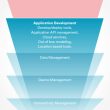
Connectivity management enables data calls to be made to devices. Devices generate data, which is the fuel that powers the IoT, but the value of that data depends on what you do with it and that is determined by the application. Therefore while it is clearly important to develop the optimum applications for specific IoT solutions, that objective of the exercise should be clearly defined and the different ways that it could be realised have to be considered with equal care.
Posted by: IoT global network
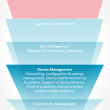
Without managed connectivity there is no IoT. Without device management there is no business case. Layers one and two in the IoT stack are inexorably linked. Connectivity enables data calls to be made to the devices, in turn device performance needs to be managed in order to realise the requisite solution. This process involves authenticating, provisioning, configuring, monitoring and maintaining the functionality of diverse devices. Secure access is a key component, but it is normally provided as an integral part of an end-to-end solution. (more…)
November 19, 2018
Posted by: IoT global network
October 25, 2018
Posted by: IoT global network

If you missed the webinar don’t worry!
Catch up with our highlights below and register here to stream the live recording.
Participants: IoT Now, IoT M2M Council, ARM, Beecham Research
Highlights
The Webinar started with two on-line polls of the areas of interest and the challenges of the participants. The first was the role of IoT in the organisation: user, OEM, application developer, solutions vendor, or systems integrator / consultant. About 50% were solution vendors and 50% users of various types, including consultants. This is more or less as expected. The second was the challenges: government regulation; internal conflicts, difficult to establish the right businesses model; lack of funding / skills; interoperability and standards. The business model was seen as the primary challenge, with interoperability also a significant challenge.
The on-line polls were followed by an introduction to IoT platforms and their use in the marketplace. Topics covered included the four key components: the application development layer plus the data, device and connectivity management layers, which are becoming increasingly complex. This was followed by an architectural view of the platform, i.e. the four main components, plus three additional categories – consumer centric, vertical-centric, such as Smart City platforms, and developer centric, plus end-to-end security which affects all categories.
This was followed by a graph showing the accelerating growth in the number of platforms in recent years. It is not slowing down: over 400 in 2016; 450 in 2017; over 500 right now and counting. Consolidation is taking place, but not a lot. Big companies are acquiring smaller companies in order to add more functionality. The wide choice will continue for the foreseeable future, hence the need for a way of helping users match their IoT requirements with the relevant platform or platforms.
That is something Beecham Research and IoT Global Network have been working on and now there is an online platform-matching tool known as IoT Pilot. It is free for adopters and has been designed to help enterprises evaluate and navigate the IoT platform landscape. This tool is not intended to generate a final selection; the aim is to provide an objective short list of candidate platforms.
Usage of the tool starts by entering responses to key questions. IoT Pilot employs the resulting search data to match the user‘s needs with a database of IoT platforms and create a short list that is available online straightaway. The same data is also summarised and analysed by Beecham Research to highlight emerging trends in the market place as well as key user requirements and concerns.
The short list identifies the name of the platform and the vendor, the category, plus a “heat map” of the platform’s strengths and weaknesses. Heat maps are a visual representation of capability of the various components of the platform: they are the results of analysis conducted by Beecham Research. In addition, there is a button on some of the individual platform pages that users can employ to auto-generate an email containing their selection criteria, to start a discussion with selected vendors.
Once users have a short list of platforms to look at – what next? Ideally they will want to approach some vendors with a list of questions to answer, so they can make a final selection and move towards implementing their chosen IoT solution. This is where work on an IoT software RFP, fronted by the IMC and on which Beecham Research also worked, comes into focus. A template RFP covering IoT platforms was created from this work that includes nearly 100 questions to ask platform vendors in order to learn more about their capabilities. This RFP template is available from the IMC (www.iotm2mcouncil.org).
October 19, 2018
Posted by: IoT global network
October 10, 2018
Posted by: IoT global network

Event date: 6-7 November 2018
Hyatt Regency San Francisco Airport, Burlingame, CA United States
September 18, 2018
Posted by: IoT global network
XIAMEN, CHINA, November 30, 2017 – Ursalink (www.ursalink.com), a customer-centric hardware manufacturer that serves easily remote access connectivity and management for IoT/M2M communications, is proud to announce that it has met all the Microsoft Azure certification requirements and got certified for UR71, UR72, and UR75 industrial wireless router.
The versatile UR71, UR72 and UR75, featuring Gigabit Ethernet, failover, Python SDK, firewall, VPN and more, is poised to satisfy customers with its top-notch performance that offers swift, stable and secure M2M communications.
Integrated with Microsoft Azure, the certified UR71, UR72 and UR75 industrial wireless router favors the ability to transmit remote field data from sensors, PLC and beyond to the Azure IoT Cloud in near-real time and empowers customers to perform further analysis, turn insights into action and take measures accordingly prior to any malfunction or permanent damage may occur.
As an intelligent IoT-based strategy, the convergence of the UR7X Series and the Azure IoT Cloud comes with exciting promises that drive custom-tailored IoT solution, operation efficiency enhancement and downtime expenses reduction.
The UR7X Series is now listed on Azure IoT Device Catalog:
UR71: https://catalog.azureiotsuite.com/details?title=Usalink-Industrial-Cellular-Router-UR71
UR72: https://catalog.azureiotsuite.com/details?title=Usalink-Industrial-Cellular-Router-UR72
UR75: https://catalog.azureiotsuite.com/details?title=Usalink-Industrial-Cellular-Router-UR75
About Microsoft Azure:
Microsoft Azure (formerly Windows Azure) is a cloud computing service created by Microsoft for building, testing, deploying, and managing applications and services through a global network of Microsoft-managed data centers. It provides software as a service (SaaS), platform as a service and infrastructure as a service and supports many different programming languages, tools and frameworks, including both Microsoft-specific and third-party software and systems.
About Ursalink:
Ursalink is a professional high-tech enterprise specializing in the design and manufacture of best-in-class industrial-grade M2M/IoT hardware and solutions with superior performance, relentless reliability and unquestioned security for the global market. With a deep, rich suite of IoT and M2M network services, Ursalink offers true global connectivity, with high-quality integration solutions for customers from all industries. For more information, please visit www.ursalink.com.